Meet the Pollinators–Eastern Carpenter Bee
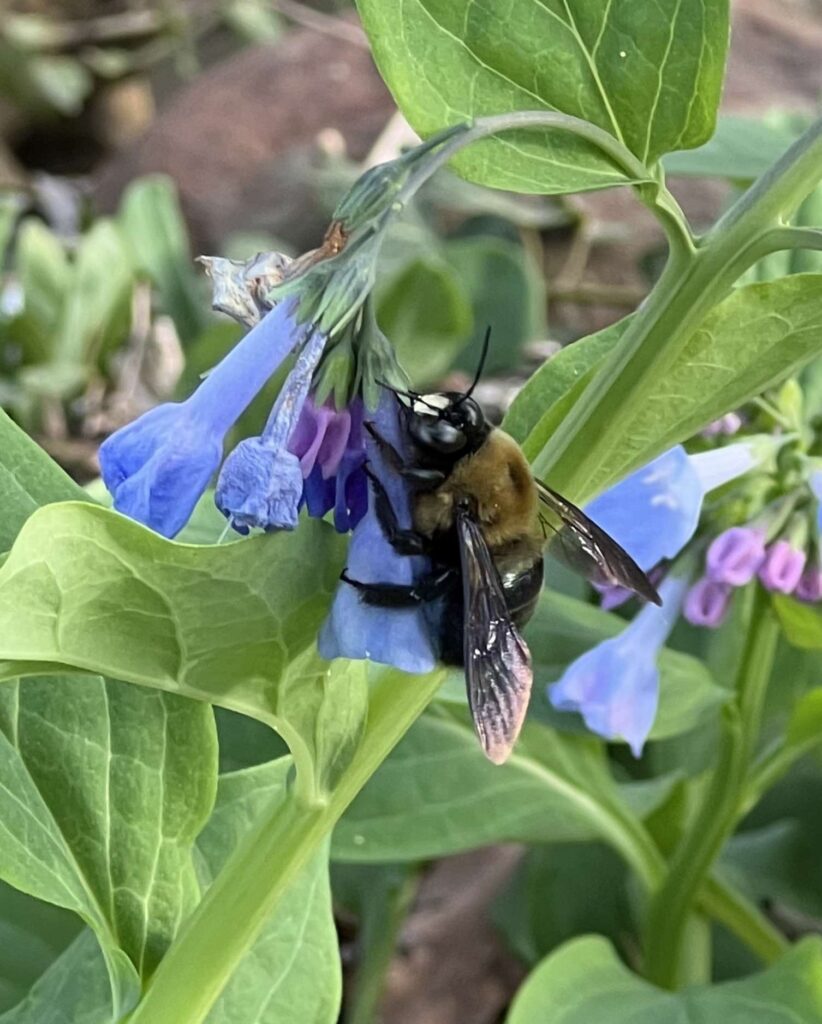
The Eastern Carpenter bee (Xylocopa virginica) is one of our native bees found throughout much of North America east of the Rockies. It nests in wood as semi-social colonies–not solitary, but not in large colonies like honeybees. Carpenter bees are of similar size and look superficially much like bumble bees. This bee feeds mostly on nectar and pollen. It pollinates a wide variety of fruit and vegetable crops as well as native wildflowers, like these Virginia bluebells growing in our home landscape here in the Arkansas Ozarks.
Hitched to Everything Else . . .
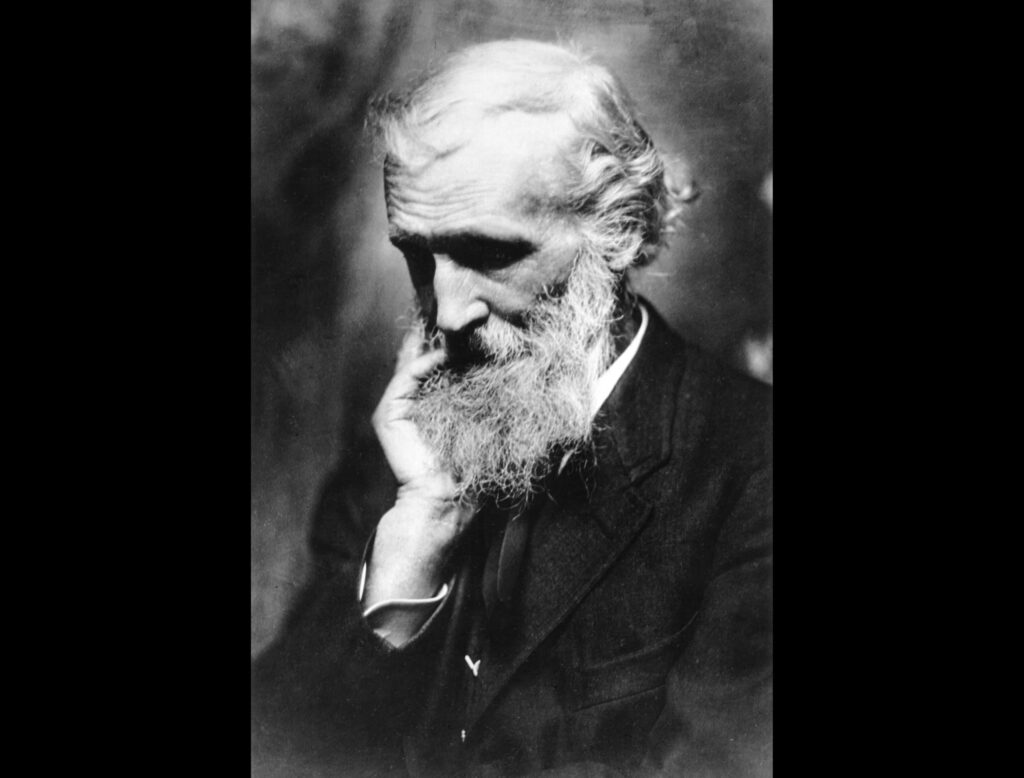
When we try to pick out anything by itself, we find it hitched to everything else in the universe. John Muir Ecology is the study of relationships—of organisms to each other and to the physical world in which they live. The great mystique of nature is in how beautifully complex these interactions are, and the wonderful surprises they bring us as we slowly uncover them. A case in point is how the re-introduction of wolves into Yellowstone National Park has caused a blossoming of nature in general within the park. Wolves were finally exterminated from Yellowstone in the 1920’s when the prevailing sentiment was that wolves are a threat to other wildlife. Deer and elk populations soon mushroomed and a new normal took over for the next seventy years. The banks of the streams and rivers began to change as the herbivores kept streamside trees and shrubs in check. Then, in 1995, wild wolves were reintroduced in Yellowstone. Scientists have been tracking the profound changes to the entire ecosystem ever since. Check out this short video about how adding one key species came to change even the course of rivers and cleaned the water. What is true in wild ecosystems like Yellowstone is also true in not-so-wild ecosystems like your backyard, your farm, your local park, or natural area. We see that each native species that is added to an ecosystem is a sort of portal—an unlocked door—for another species to show up on its own, and then another. A simple wildflower can be a portal for other species in your habitat: for example, a bird, a bug, or a butterfly. Perhaps an insect that you never even noticed uses that wildflower plant in some way; and perhaps there is a bird whose favorite food is that insect; the bird is now attracted to your habitat when it wasn’t before. The new link in the food web becomes the “hitch” for yet another species, and another, and so on. Suddenly, you have a more balanced ecosystem, attracting birds naturally–rather than just because of your backyard feeder. A bird feeder by itself is the ecological equivalent of a fast-food drive-through. When you sow seeds of native plants, you add the natural “hitch” for additional species to hook up to, in the words of John Muir.
Get Ready This Summer For Next Year’s Wildflowers
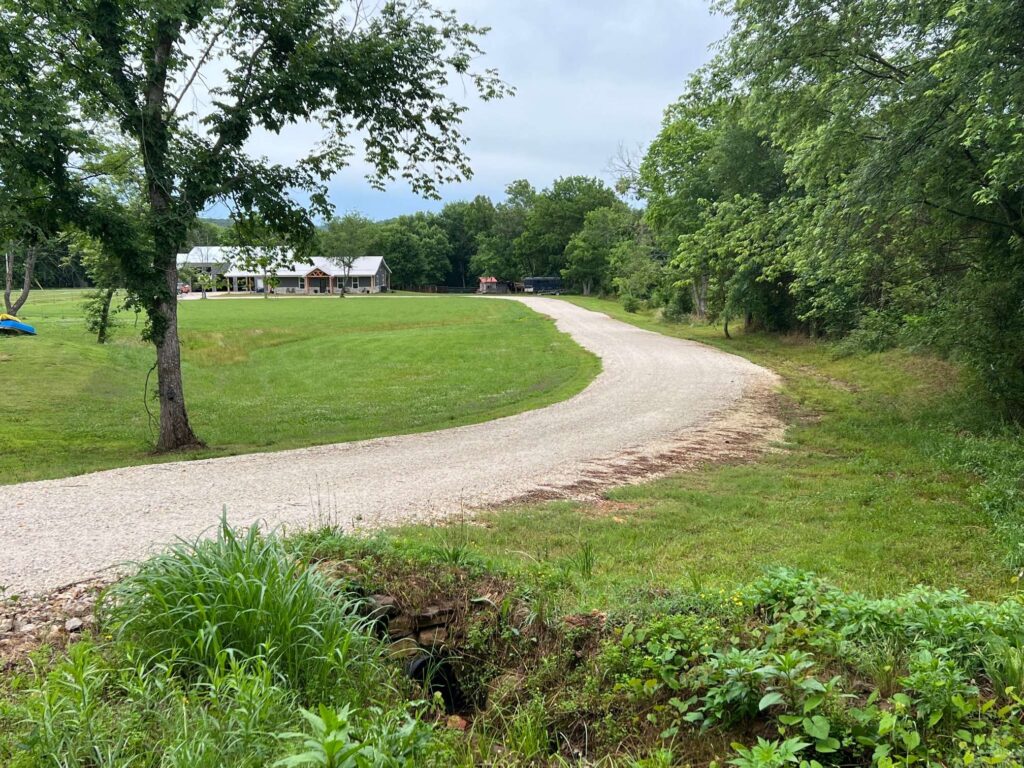
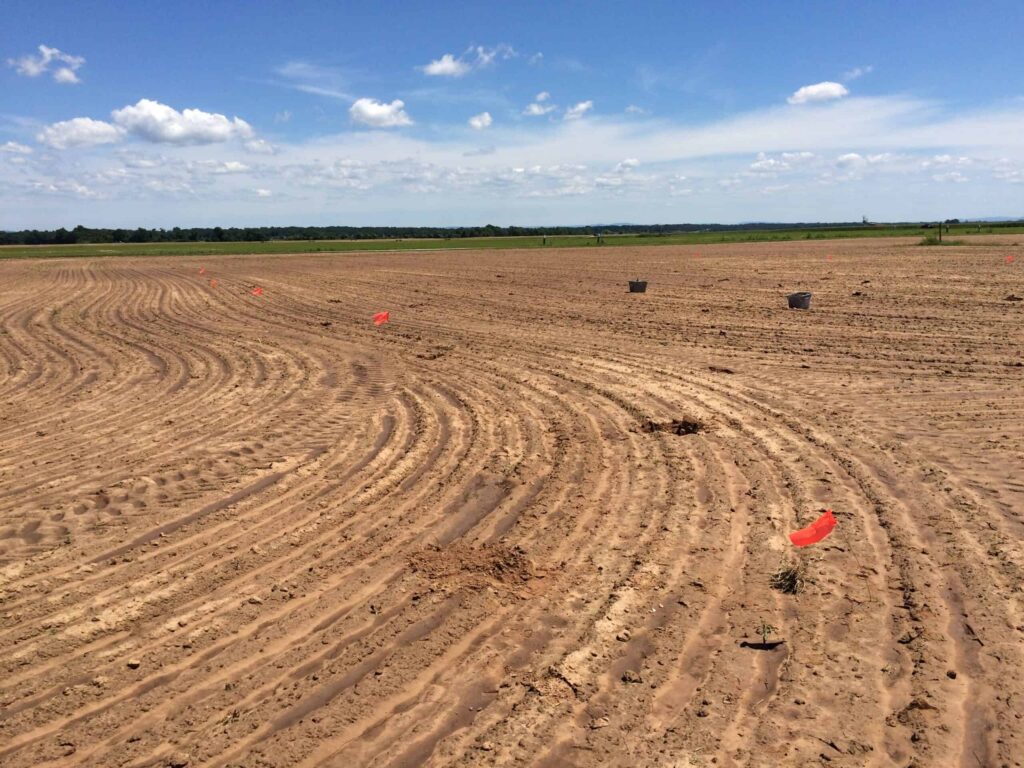
First step: preparing the ground. And NOW is a good time. Each fall, we are repeatedly asked, “Am I too late to plant wildflower seed? Will it be okay to plant my seed in the fall or winter?” The answer to the latter is YES because that is when nature plants them. Late summer, fall, and winter is when the seeds of most native species of wildflowers and grasses mature and make their way into the soil. If you have prepared the site and are ready to go for fall or winter planting, you are simply imitating nature. This is especially true for seed mixes that contain only native species. Sometimes the soil at your site has already been prepared for you–as when a utility company has cleared a right-of-way or a new driveway has been added (see photo). But if your ground is full of vegetation that you want to convert into a wildflower or native grass meadow, then summer is the time to get it ready. Undesirable existing vegetation must be actively growing for you to control it. So, summer is the time! Click here to see our planting guide which includes suggestions on preparing your ground this summer for planting in the fall.
Monarch Refueling Stations
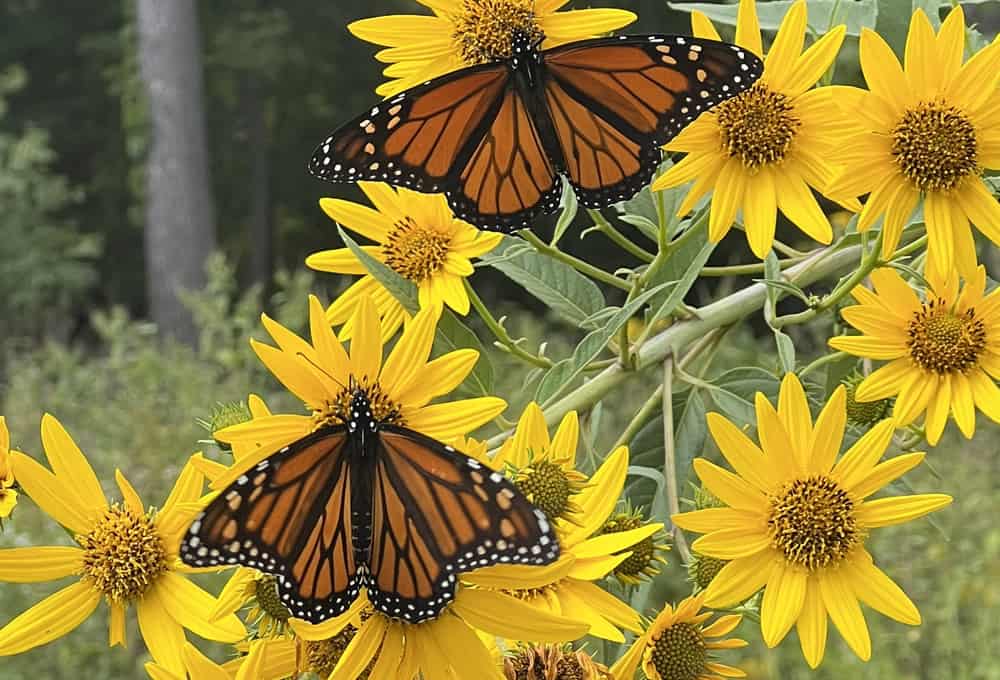
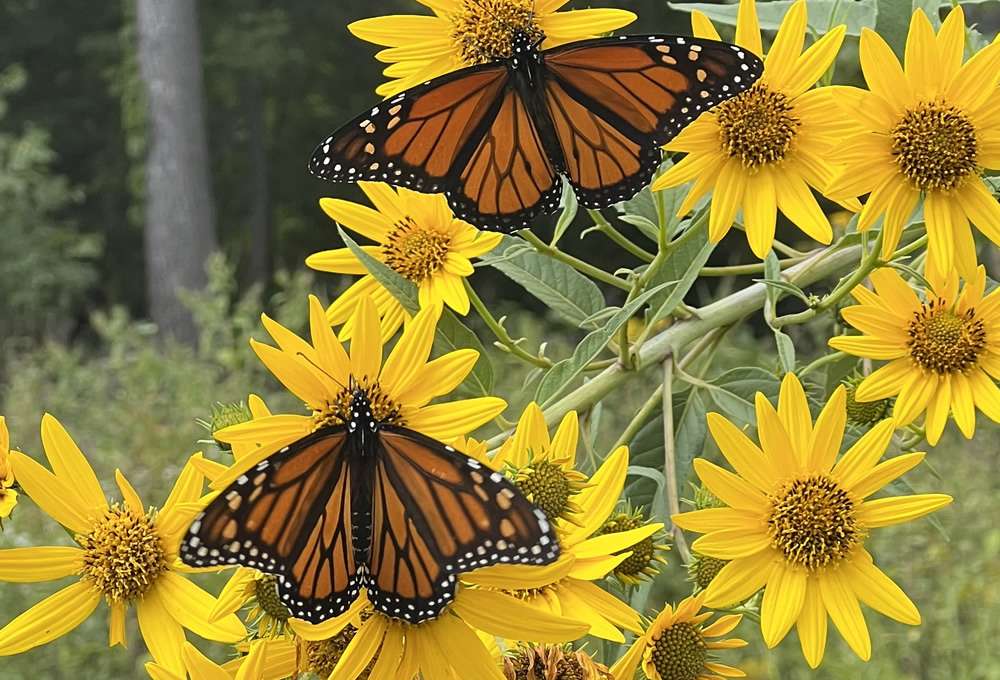
On a sunny day in early October, our place was swarming with beautiful Monarch butterflies. Of particular interest to them were the 10-ft tall clumps of Sawtooth Sunflower–towering shoots of bright yellow blossoms that serve as refueling pumps like a station off the interstate highway. That’s what fall-blooming flowers do—refuel butterflies. Monarchs fan-out and spend the summer throughout the eastern two-thirds of the United States and southern Canada. After several generations, they begin to migrate southward to the Oyamel Fir forests of mountainous Central Mexico, massing together by the millions to spend the winter months. A monarch butterfly born in the northern US or southern Canada must fly up to 2,800 miles to migrate to Michoacan, Mexico. That’s a long way for an animal that weighs an average of only one-half of a gram– half the weight of a small paper clip! A monarch butterfly is like a 4-inch-wide orange kite that must sail favorable winds when they are available. Cold days and rain will ground them. Each monarch must find their way to a specific, remote place it has never personally been–a marvel of nature right in our own backyard. For more information on monarch biology and migration, check out Monarch Joint Venture.org. Monarchs are one of just a few migratory insect species. Fall-blooming flowers are critical for the energy- rich nectar they require to continue the trip south. Holland Wildflower Farm has wildflower seed mixes specifically designed for monarch butterflies, such as our Monarch Native Wildflower Mix—a rich selection of native-only species beneficial to Monarchs. Also, our Monarch Butterfly Garden Seed Mix, a more modestly priced version which includes some garden variety flower species that they use for the nectar. A more generalized pollinator mix is our Eastern Pollinator Mix. You can do your bit to help the monarchs by planting a pollinator-friendly “refueling station” along their route.
Prairies are Part of the Solution to the Climate Change Crisis
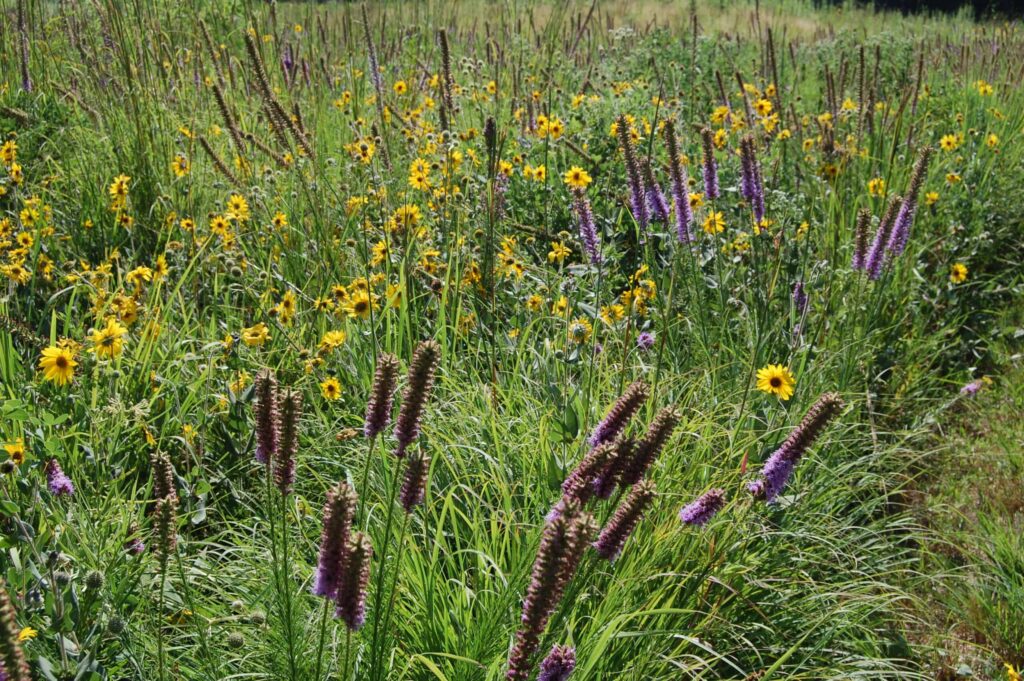
No one can deny–it was REALLY HOT this summer. And dry. In fact, it was the hottest summer on record since the late 1800’s when temperatures were first systematically collected and recorded. If you have ever spent time inside a greenhouse on a hot, sunny day, you understand something about the “greenhouse effect.” Energy from the sun shines through the transparent covering, but the reflected energy cannot pass back out, heating the inside of the greenhouse. Carbon-containing gases, such as CO2, act like the cover of a greenhouse. Air temperatures rise across the globe. Ocean temperatures rise. Weather patterns become more extreme and unpredictable. Nations around the world are grappling with how to reduce the amount of CO2 and other gases that we emit. Another part of the solution is to trap or fix that emitted carbon in vegetation and in the ground. Planting trees and maintaining healthy forests is one way to use photosynthesis to fix that carbon dioxide into harmless organic matter. In fact, California and other entities around the globe have included the planting of trees as a form of cap-and-trade offsets to monetize the value of trees in fighting climate change. But as researchers at the University of California, Davis have recently shown, trees may not be the best choice in a warming climate. Trees store most of their fixed carbon in their trunks, branches, and leaves—above ground. In a warming climate, forests are stressed by drought and wildfires. Burning trees release carbon back into the atmosphere, only making the problem worse. Grasslands, on the other hand, sequester (store) the fixed carbon mostly underground—80-90 percent of it. And fire is a natural part of the prairie ecosystem. When a fire sweeps through a grassland, it only burns the above ground thatch and leaves. The root systems, which can reach 10-14 feet deep into the soil, are untouched. In fact, burning invigorates prairie plants. New root growth following a fire causes a net carbon gain that fixes permanently in the soil, outweighing the amount of carbon lost above ground. Holland Wildflower Farm recently had the opportunity to provide native grass and wildflower seed for a large prairie restoration project in the Southeastern US. Although we often think of this region as being dominated by forests, it actually was home to over a million acres of tallgrass prairie. Unlike the horizon-to-horizon prairies of the Great Plains, it existed in smaller tracts, many of which were plowed under for cotton, rice, and soybean production. Now, some former grassland acreage is being returned to native prairie and we are proud to be a part of the effort. Besides helping to reduce carbon in the atmosphere, native grasses and wildflowers provide habitat for pollinators and all kinds of wildlife. Even small prairie plantings of an acre or less can help to provide a better climate future for those who come after us. Be a part of the solution—Plant A Prairie!
Go Wild!
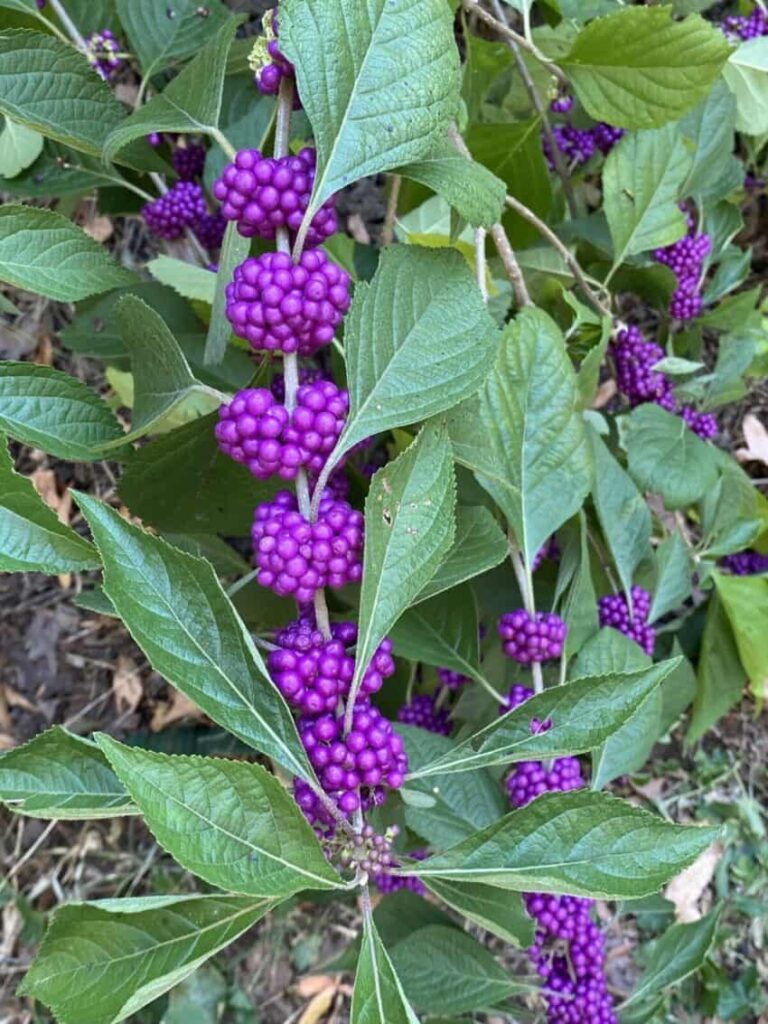
American Beautyberry (Callicarpa americana) is a shrub native to the Southeastern US, various Caribbean islands, and the Gulf Coast of Mexico. Lush green foliage is followed by pink flowers and gorgeous lavender-purple berries which last well into the winter, until birds and other wildlife have picked them clean. The pictured plant has been in a bed in our landscaping for several years now. Last fall an early and severe freeze killed it to the ground. But this spring, slowly but surely, it leafed back out and is now as lush as ever and blooming again. We had other shrubs—non-natives–that died back from the same freeze and never re-sprouted. The point is that plants native to your area are there for a reason. Native species have evolved over millennia to the conditions in that area. This early freeze was not American beautyberry’s first rodeo with an occasional early, or late, hard freeze. Freezes farther north from our location are too often and too severe, so Beautyberry is not native there. When you use native plants, you are hedging your bets with the tried and true. Go wild! Check out the USDA Plant database website (plants.usda.gov) for range maps and other information on a particular species or genus. You can find out exactly where a native plant is found in nature by zooming-in on the map to switch from a North American map with state ranges down to state maps which highlight at the county level. Click this link to see an example using American beautyberry. The database and range maps also include many non-native species used as landscape plants. Native plants are better adapted to bounce back from unusual weather events–and “unusual” weather appears to be the new normal.
Butterfly Desert
Several years ago, during October, I was working in a soybean field in Stuttgart, Arkansas. I walked along the edge of a mature planting of soybeans—some with dry, stems and papery pods, others with yellowing leaves. The plot was maybe ten acres, with many more acres of dry soybeans and rice in adjacent fields. The bordering field had just been “floated” with a laser-leveling rig to get it ready for planting winter wheat–another ten acres of absolutely, bare dirt. Walking along the edge of the two fields, I noticed a monarch butterfly drifting lazily through the air in the sporadic, unpredictable pattern they often fly (probably driven by chemical cues). The soybeans were ready for harvest so had no flowers. The butterfly was making its way across the barren, plowed field. A few minutes later, another Monarch floated by headed in vaguely the same southwesterly direction as the earlier one–towards Mexico, their winter destination. It occurred to me that these pretty butterflies, seemingly nonchalant in their herky-jerky flight pattern, actually were in a desperate search for food. I don’t know how far a Monarch is able to fly without re-fueling, but these little fellows were in for some slim pickin’s for quite a spell—there was not a blooming flower for hundreds of acres, as far as the eye could see. This agricultural land was a barren desert to them from a calorie standpoint, except for a weed here and there in a bar ditch along the section roads. The area used to be part of an expansive native prairie known as the Arkansas Grand Prairie. The county where it is located is called, Prairie County. That is why it is so productive for growing rice, wheat, and soybeans today. A few miles to the north is a long, narrow corridor of prairie remnant that has been set aside along US Highway 70 which runs parallel to and just south of Interstate 40. The prairie reserve is about 25 miles long, but only about 30 yards wide, between the two-lane highway and an old railroad bed. In October, the prairie remnant lights up with bright yellow blossoms of Compass Plant and Goldenrod, of Partridge Pea and Tickseed Bidens, the gray-white plumes of Boneset, and the pretty purple Ironweed. I try to imagine the sights and sounds and smells—the experience—of being in that very spot two hundred years ago. Before the European sodbusters spilled across the mighty Mississippi River from Tennessee, from Mississippi, from Alabama, to claim some of that rich prairie for themselves, plowing it under to grow cotton, the cash cow of those days. That 30-yard-wide swath is like a small museum of what was once unbroken prairie for miles and miles in every direction. This prairie is a 30-minute drive north from those butterflies I watched—and that only if you are traveling 60 miles per hour without stopping–hardly a butterfly’s style. On the one hand, agriculture has changed a lot of land from deep forest to open land, with flowers in the ditches and ecological “edges” that produce more flowers than you would see in the original dense forest. The winners there are butterflies and open-field birds. The losers are forest animals, like squirrels, bears, and turkeys. With every management or environmental shift comes a whole list of winners and losers. Just like economic shifts in human ecology—recessions, war, trade battles, energy cost spikes—there are economic winners and losers in the same sort of way. In fact, calories are to a butterfly what dollars are to a Wall Street investor. Large expanses of row crops are the caloric equivalent of an economic depression for a Monarch butterfly trying to make it to Mexico. Yes, we must grow food for us humans. But it remains true that mature crops and bare soil are a desert for a butterfly searching for sugary nectar—their fuel. The good news is that there is a movement afoot to convert some less productive agricultural land from cultivation and back into natural habitats. Such conservation restoration projects can earn carbon credits or offsets for corporations who purchase the land and who pay to seed it in prairie grasses and forbs, or plant forest trees. We see this as a win-win situation for corporations, farmers, non-profits, and the environment. Holland Wildflower Farm is excited to be a part of this noble endeavor. One last thought: we don’t have to convert thousands of acres of farmland to benefit pollinators like the migrating Monarch butterflies. Even small plantings of native wildflowers can be a lifeline. Have you ever driven on a highway only to look down at your gas gauge and see it dangerously low–and no gas station in sight, exit after exit? Even a small planting of natives can be that refueling station for a migrating monarch or other pollinator. That’s something nearly all of us can do.
When to plant wildflowers? Native seeds can be successfully planted in fall and winter.
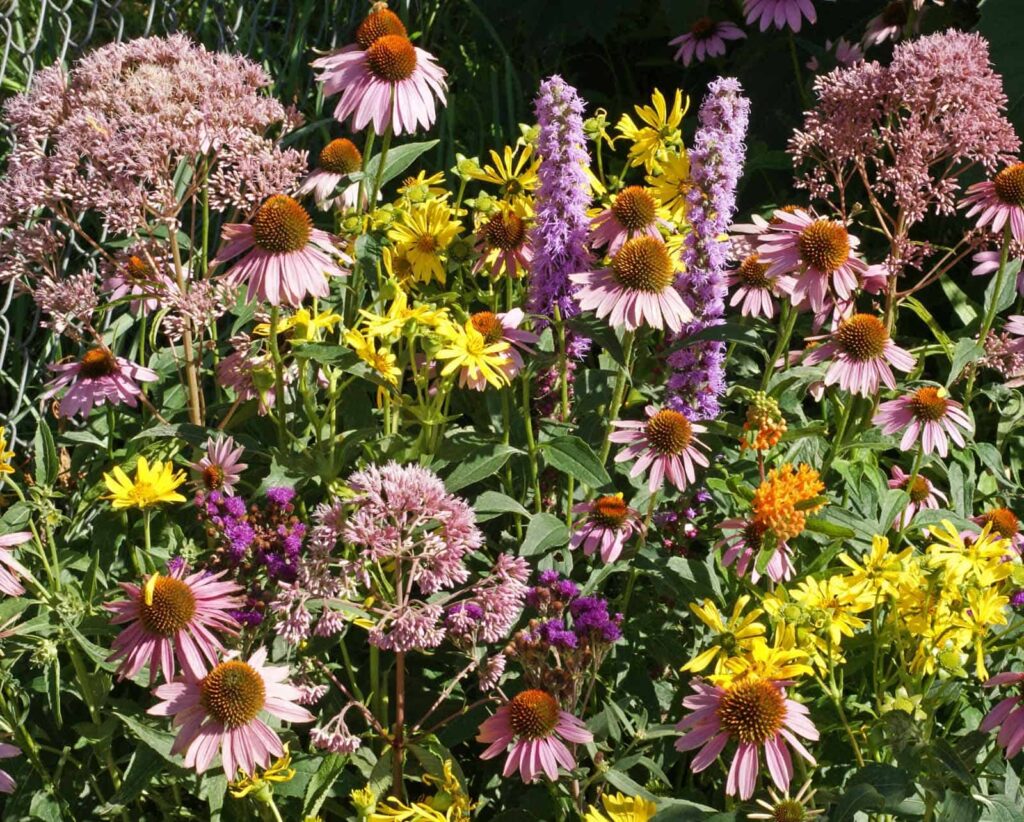
Late summer, fall, and winter is when most native species of wildflowers and grasses mature and make their way into the soil. If you have prepared soil ready to go for fall or winter planting, you are simply imitating nature.
How Much Wildflower Seed Do I Need
Start by measuring the wildflower seed project site How much wildflower seed do I need? Well, first decide how much ground you will expose to seeding wildflowers or native grasses. Get the square footage by measuring length x width. So then if you have 200 feet by 10 feet you have 2000 square ft. Be aware of the type of soil and the weed competition you may encounter with unwanted species whose seeds may be present in the soil bank. If the site has been kept mown, and is not a weedy area you will be able to use a lesser rate than in an area where a lot of competition from weeds or grass is expected. How to choose which wildflower or grass seed mix to use? Our mixes are designed for a purpose or a region. So once you’ve determined your goal (example: attracting pollinators), choose which Holland Wildflower Farm seed mix or mixes are best suited for your purpose. Then decide how much seed you need. We advise that you seed your site when you have taken measures to minimize weed competition and prepare your soil for seeding. The seed rates are in the mix descriptions and they are listed in the table below: recommended seeding rates for each wildflower seed mix or native grass mix. Explanantion of seed rate ranges and your location and specific site conditions Project analysis will help determine how much seed you will need. Each of our seed mixes has its own recommended seeding rate found in the description for that mix (see table below). The recommendation for most mixes will come with a range, such as 10-20 pounds per acre. This means that one pound of seed will cover between 2,000 and 4,000 square feet. (A strip 20 feet wide and 100 feet long equals 2000 square feet.) So, do you need 10 pounds per acre or 20 pounds? In the southern, especially southeastern areas the weed competition is greater and the highest seed rate is generally recommended. Additional considerations are given after the table. Thank you for using your ground to make the world a better place. Seed Mix Chart gives recommended rates for wildflower or native grass mixes below Seed Planting Rate for Holland Wildflower Farm Mixes Seed at the high rate for best results. Wildflower or Native Grass Mix Name pounds per acre square feet covered by one pound (at high rate) wildflowers, grass, or both type of mix Eastern Native Habitat Seed Mix 11 4,000 both habitat Floodplain Seed Mix 20 2,000 both habitat Native Upland Meadow Wildlife Seed Mix 20 2,000 both habitat Wildlife Food Plot Seed not given not given both habitat Shortgrass Prairie Wildflower Seed Mix 9-18 2,000 wf habitat Tallgrass Prairie Wildflower Seed Mix 10-20 2,000 wf habitat Bee Feeder Seed Mix 6-12 2,500 wf pollinator Bird & Butterfly Wildflower Seed Mix 10-20 2,000 wf pollinator Bumblebee Buffet Seed Mix 9-18 2,000 wf pollinator Eastern Pollinator Seed Mix 7-14 2,500 wf pollinator Honeybee Feed Seed Mix 6-12 4,000 wf pollinator Hummingbird Seed Mix 5-10 4,000 wf pollinator Monarch Butterfly Garden Seed Mix 12-24 2,000 wf pollinator Native Flower Mix for Monarchs 11-22 2,000 wf pollinator Western Pollinator Native Seed Mix 7-14 4,000 wf pollinator Cottage Garden Flower Mix 7-14 2,000 wf special use Deer Resistant Flower Mix 6-12 4,000 wf special use Eastern Xeriscape Native Wildflower Mix 2-24 2,000 wf special use Golf Course Mix 20-25 4,000 wf special use Little Bit Shady Wildflower Seed Mix 15-20 2,000 wf special use Low Grow Wildflower Mix 10-15 2,500 wf special use Native Perennial Wildflower Mix 7-14 3,000 wf special use Shady Golf Course Wildflower Mix 7-14 3,000 wf special use Western Xeriscape Wildflower Seed Mix 7-14 3,000 wf special use Rain Garden Grass Seed Mix 15 2,500 grass/sedge special use Rain Garden Seed Mix 20 2,000 both special use Wildlife Food Plot Seed not given not given both special use High Plains Native Wildflower Seed Mix 11-22 2,000 wf regional Intermountain Native Wildflower Mix 7-14 2,500 wf regional Midwest Native Wildflower Seed Mix 8-16 2,500 wf regional Mountain Native Wildflower Seed Mix 7-14 3,000 wf regional Northeast Native Wildflower Mix 9-18 1,000 wf regional Northwest Native Wildflower Seed Mix 9-18 2,000 wf regional Southeast Native Wildflower Seed Mix 10-20 2,000 wf regional Southwest Native Wildflower Seed Mix 6-12 3,000 wf regional Texas Oklahoma Native Wildflower Mix 11-22 2,000 wf regional Northeast Native Grass Mix 15 2,500 grass regional Southeast Native Grass Mix 15 2,500 grass regional Southern Plains Native Grass Seed Mix 10 2,000 grass regional Southwest Native Grass Seed Mix 8 5,400 grass regional Western Native Grass Seed Mix 7 5,000-7,000 grass regional High Mountain Native Grass Mix 12 2,000 grass habitat Shortgrass Prairie Grass Seed Mix 6 5,000-7,000 grass habitat Tallgrass Prairie Grass Mix 10 4,000 grass habitat Other considerations about Wildflower and Native Grass seeding rates : Southern states, especially those in the Southeast, should use the highest recommended rate because of the intense weed pressure. Use the higher rate if you expect high competition from weedy species. Weeds can be a problem if the site was not thoroughly prepared before planting–see our Planting Guide–or if it has a history of weeds (weed seeds in the soil), especially from non-native invasive species. A higher rate is advised if the site will not be strawed (lightly mulched with straw or excelsior blankets for short term erosion control) after seeding or irrigated during drought in the first year. We recommend using a light mulch because it will hold moisture to the seed. If your site has rocky or very thin soil, you may want to consider adding a 2-4 in layer of compost to give the seeds enough moisture to take hold of the soil. Wildflowers and native grass seeds do NOT need fertile soil but they do need to be able to penetrate the initial soil surface before their small but powerful roots begin
Comparing the Cost of Wildflower Seed to Lawn Grass Seed
Question: Why is wildflower seed so much more expensive than lawn grass seed? Answer: It’s not! When figured on a per-unit-area basis, the cost of wildflower seed and lawn grass seed is very comparable. Depending on the species used, wildflowers can be even less expensive than grass seed. Here’s the deal—it is like comparing apples and oranges, in a way. Actually, it is like comparing bb’s to bowling balls. Grass seed, like fescue, is relatively large compared to many types of wildflower seeds. One pound of tall fescue seed contains 227,000 seeds. Many wildflower species have tiny seeds—showy evening primrose has over 3 million seeds per pound, and cardinal flower has 8 million seeds per pound! So a small amount of seed goes a long way. It is the number of seeds that is important, not the weight or the size. That is one reason why we say it is like apples to oranges. The bottom line is this: you have a particular area that you would like to convert to wildflowers or to a native grass/wildflower meadow. How much would it cost for this compared to just seeding lawn grass? The key is in the seeding rate; that is, how much seed per unit area do I apply? Wildflower mixes can cost considerably more per pound than lawn or pasture grasses, but the seeding rate is much lower, so you need considerably fewer pounds. Picture a football field: if you started at one goal line seeding at a moderate rate for lawn grass (9 lbs/1,000 sq ft) from sideline to sideline, a 20-lb bag of grass seed would only last until just past the 4 yard line (the yellow zone below). You barely got out of the end zone!So, the cost per pound is not the whole story—the real cost of seeding is the price per pound for seed AND the seeding rate. Taken together, wildflower seeding is comparable, or sometimes cheaper, than seeding turf grasses. Here’s a real-life example: I checked prices on-line for Rebel Tall Fescue and found that it cost an average of $50 for a 20-lb bag; that’s $2.50 per pound. Yep, that’s pretty cheap. But you have to put a LOT of that seed out to get a lawn—7 to 10 pounds of it per thousand square feet of area. At $2.50 per pound times 9 pounds, that is $22.50 per thousand square feet for lawn-type tall fescue. The finer turf-grass blends costs more like $4.00 per pound, or $36.00 per thousand sq. ft. The pasture-type tall fescue variety, Kentucky-31, is a similar price to Rebel Tall Fescue and can be sown at a lower rate, but that’s what you get—clumpy, wide-blade pasture grass. Let’s say you have a one-third acre (= 14,520 sq. ft.) plot of ground that you don’t know what to do with, or that you are tired of mowing continually. Or a right-of-way area recently disturbed by the utility company. You could plant that one-third acre in turf grass for a seed cost of about $330 at a moderate seeding rate of 9 lbs/1,000 sq. ft. The nicer turf grass blends will cost you well over $500. insert photo of someone mowing a big grassy area With our Eastern Native Habitat Seed Mix, at ¼ pound/1,000 sq. ft., you could plant the same area for $165—exactly half the total cost of the cheapest grass seed. And you mow a couple of times per year, or not mow at all if you like. Yes, the Habitat Mix costs over $45 per pound, but you need less than 3% as much seed by weight as the turf grass seed. (Insert photo of this mix) A moderate-to-high seeding rate of our Monarch Butterfly Garden Seed Mix would cost $334, about the same as buying the necessary amount of grass seed. (Insert photo of this mix) The Eastern Native Pollinator Seed Mix, at a moderate rate, would cost $382 for seed to plant the same plot of ground. A totally native seed mix for a total cost that is cheaper than the lawn grass blends. Bottom line: don’t make decisions based on partial information—you might find yourself stuck at only the 4-yard line with some grass to mow, when you could have scored an entire field full of lovely wildflowers! Of course, there are other considerations when planning a seeding project. Check out our Wildflower Planting Guide.